The system is useful.
The interaction layer is uneven.
The strongest surfaces are specific, restrained, and clear about the next action. The recurring debt is smaller: unnamed controls, low-contrast secondary text, undersized targets, and motion that ignores reduced-motion preferences.
44 public-site renders · 884 Hub page renders · 56 app-shell and interior renders · 0 public client sites changed
Do not add “AI polish.” Keep each product’s identity. Repair semantics, contrast, touch geometry, task states, and reduced-motion behavior before adding visual effects.
Fix order
Severity reflects whether a flaw blocks understanding or control, repeats across a shared primitive, or affects a public task path.
TTC and Talsky public controls need names and labels
Name menu, carousel, and social controls; label all form fields; restore a semantic H1; keep cloned slides out of the accessibility tree.
Restore browser zoom in website admin and Athena
Remove user-scalable=no and maximum-scale restrictions. Pinch zoom is a user capability, not a layout option.
Repair unnamed and nested controls in cortextOS
Name the org selector and icon controls; remove the focusable timestamp nested inside clickable task rows; make the activity scroller keyboard reachable.
Correct critical semantics in high-use Hub tools
Start with Saturday Promo, TTC trip expenses, Print Audit, Reactivation Review, setup-guide checkboxes, rollout queues, and social image alternatives.
Make reduced motion a real system behavior
Remove reveal translations, delays, pulses, and pings when reduced motion is requested. Cultivate, BodyMind, TTC/Talsky, and cortextOS share the largest gaps.
Raise secondary-text and status contrast
Fix semantic token pairings while preserving approved brand palettes and fonts. Small muted text is the most repeated failure across Hub pages.
Give controls a 44px hit area
Expand invisible padding around links, icon buttons, tabs, filters, and chips. Keep glyphs visually compact; make their touch geometry forgiving.
Preserve authored systems
VEC, More After 50, FLOW, and several focused Hub tools need targeted repairs—not a template rewrite, gradients, glass, or more card nesting.
Public sites
Eleven representative routes, captured on desktop and mobile in both preference modes. Every request returned 200; none overflowed the mobile viewport.
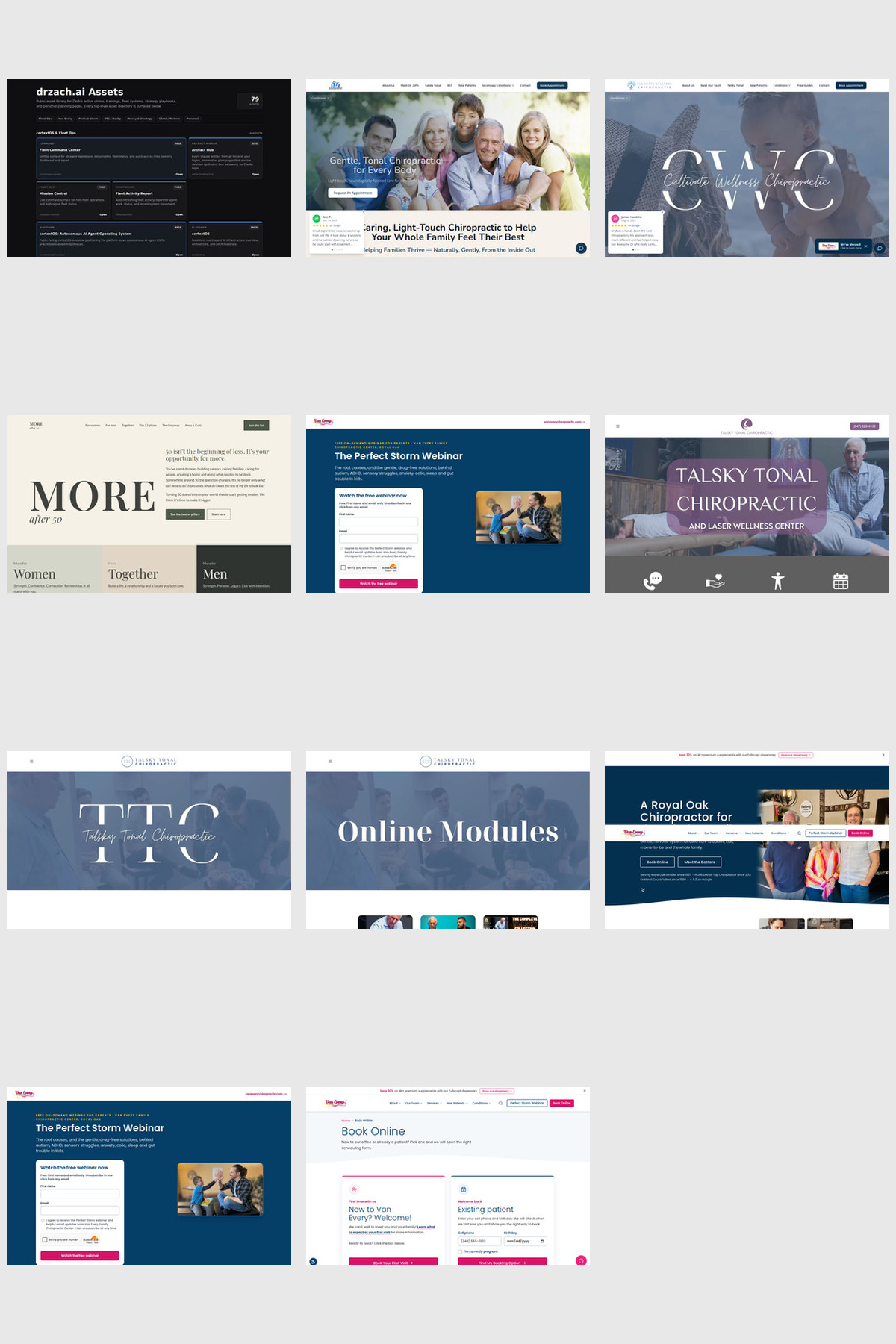
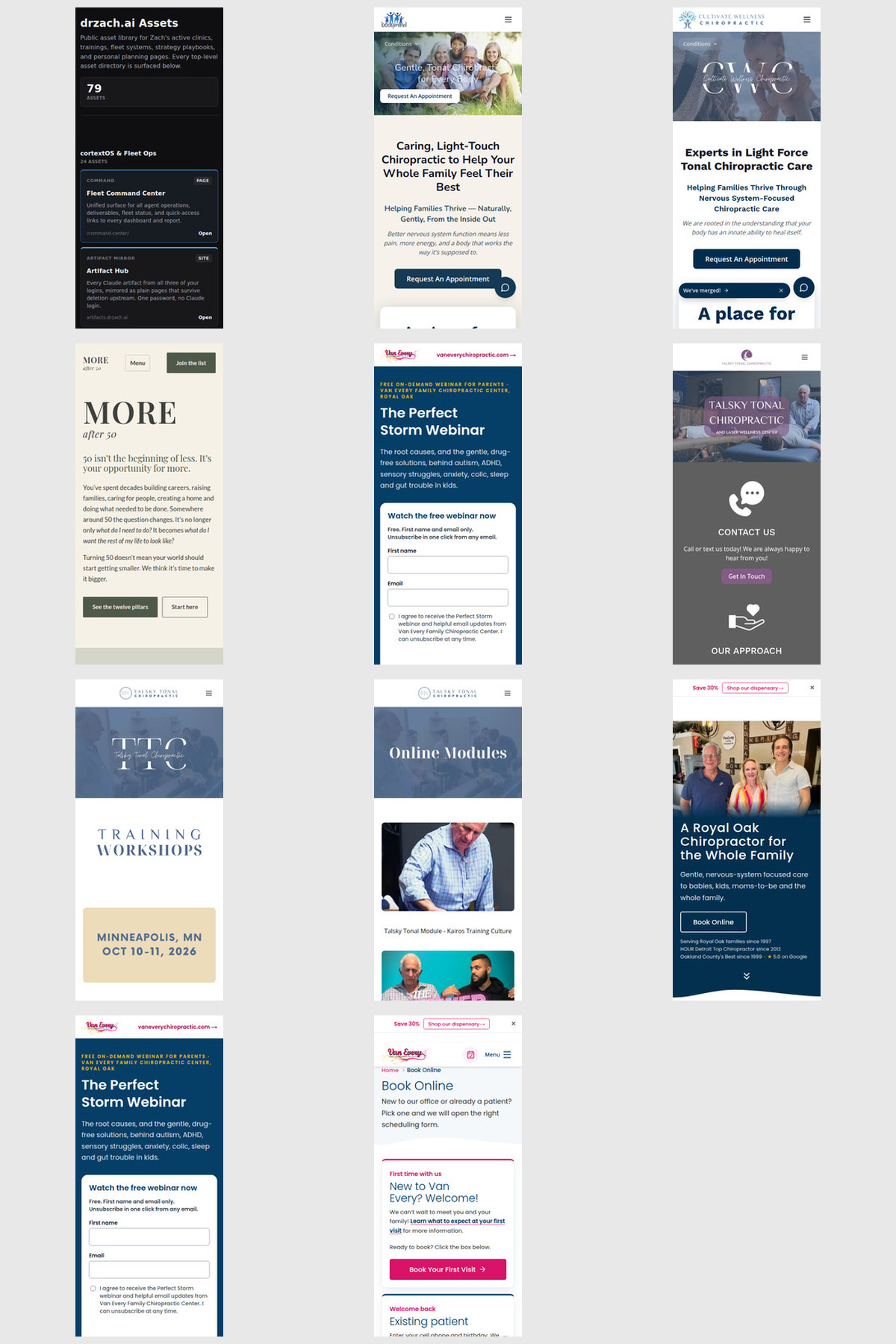
| Surface | Apple | Impeccable | Top fix |
|---|---|---|---|
| Van Every core | 19/24 | 18/20 | Increase nav and secondary-link hit areas; no redesign. |
| Perfect Storm on VEC | 18/24 | 18/20 | Enlarge secondary links and keep current brand system. |
| TTC training home | 8/24 | 8/20 | Name controls, label fields, add a real H1 and task path. |
| TTC Online Modules | 9/24 | 9/20 | Promote the visible title to H1 and remove motion under reduced-motion. |
| Talsky practice | 9/24 | 9/20 | Name carousel/menu/social controls and remove cloned semantics. |
| Cultivate Wellness | 13/24 | 12/20 | Repair contrast and the shared 700ms reveal primitive. |
| BodyMind Chiropractic | 13/24 | 13/20 | Repair contrast and differentiate information rhythm. |
| More After 50 | 17/24 | 16/20 | Use existing darker tokens for three small-text combinations. |
| assets.drzach.ai index | 13/24 | 14/20 | Raise muted contrast, enlarge category links, reduce uniform grid density. |
Artifact Hub
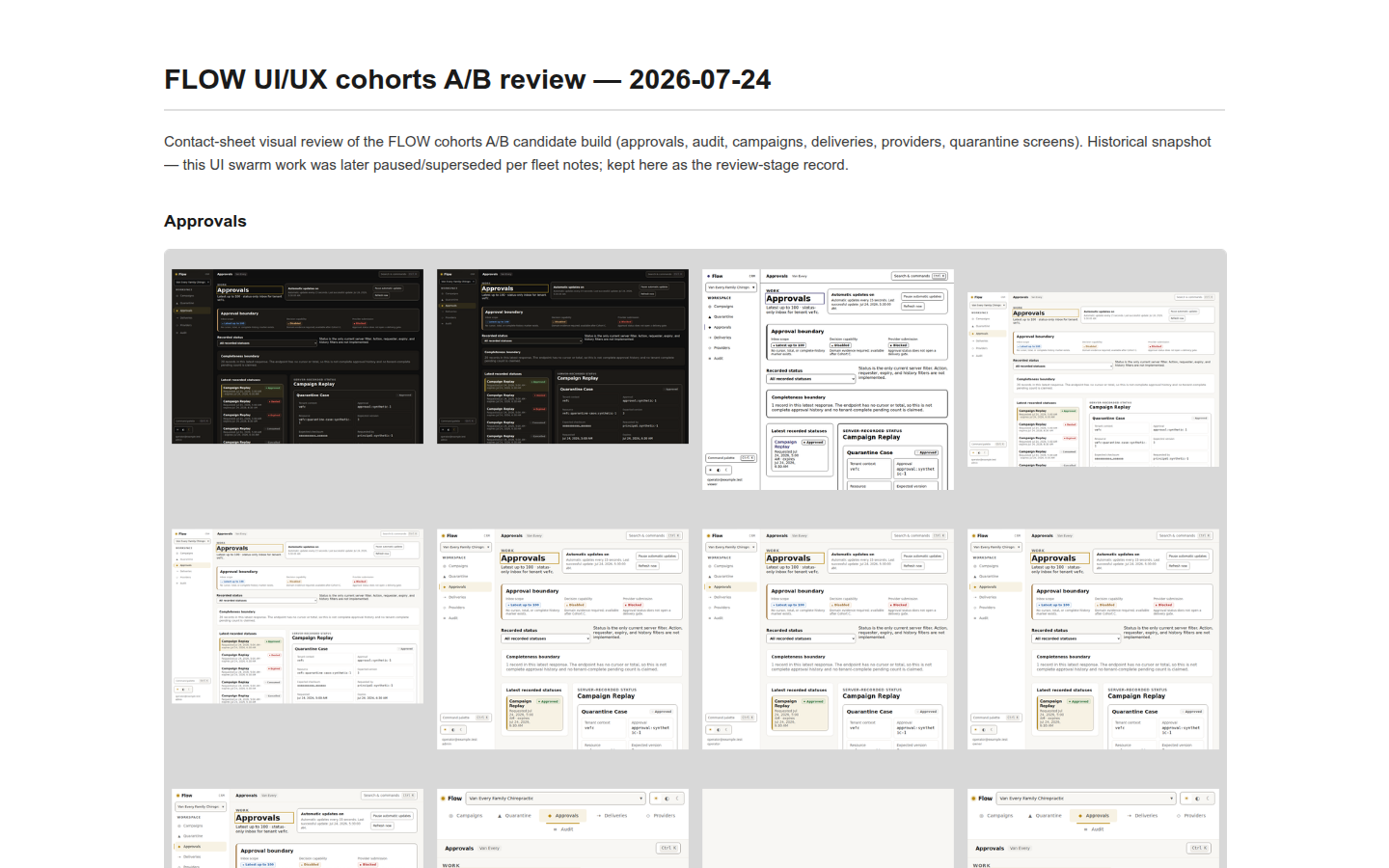
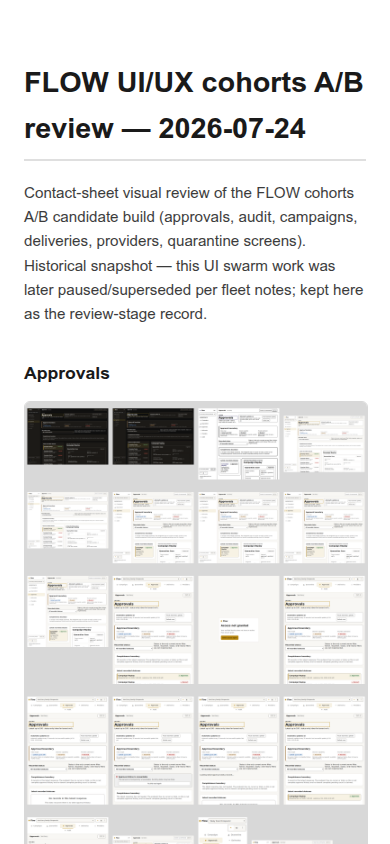
All 70 local dashboard rows and all 151 local artifact/media rows in the reconciled snapshot were rendered in four modes: 884 captures with no renderer failure.
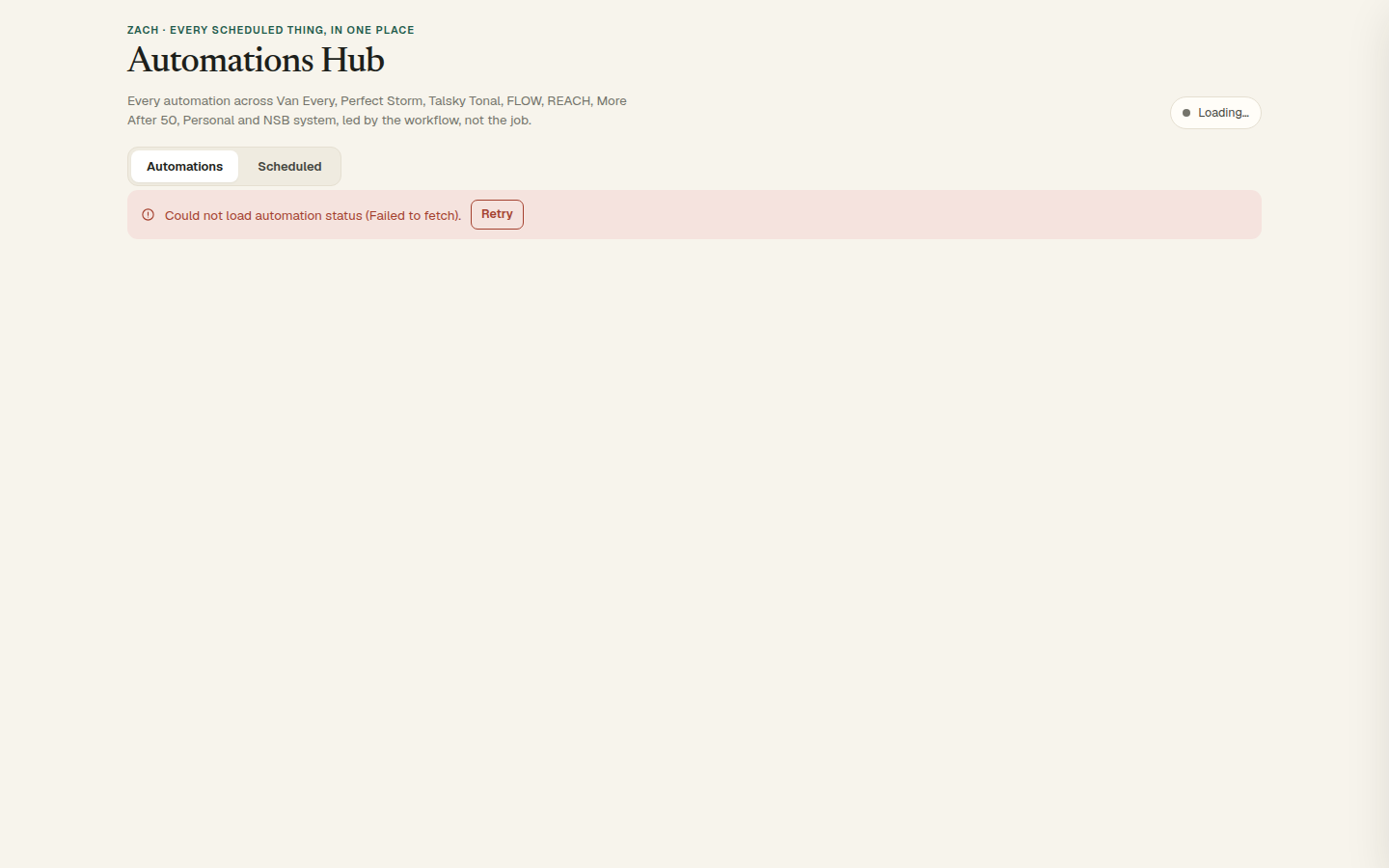
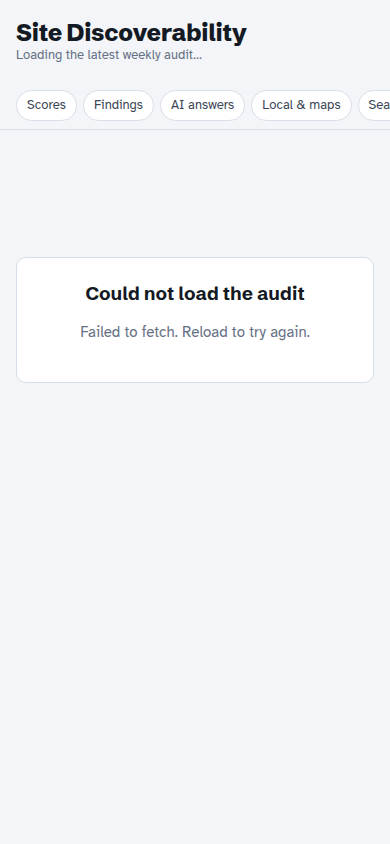
Dashboards · 70 pages
Three pages overflow mobile; 50 expose at least one target below 44px; three initial states lack an H1. The immediate P0s are unnamed controls in Saturday Promo and TTC trip expenses, plus mobile containment in TTC Dashboard, Billing, and TTC trip expenses.
Artifacts and media · 151 pages
Nineteen pages overflow mobile; 98 desktop pages expose a small target; eight pages carry critical semantic issues. Print Audit’s timed refresh, missing labels, invalid list ownership, and image alternatives lead the queue.
Authored quality
No two artifact/media sources were byte-identical. The collection contains real variety—reports, tools, proofs, guides, image reviews, and operational dashboards. The repeated problem is accessible token discipline, not lack of ornament.
Internal tools
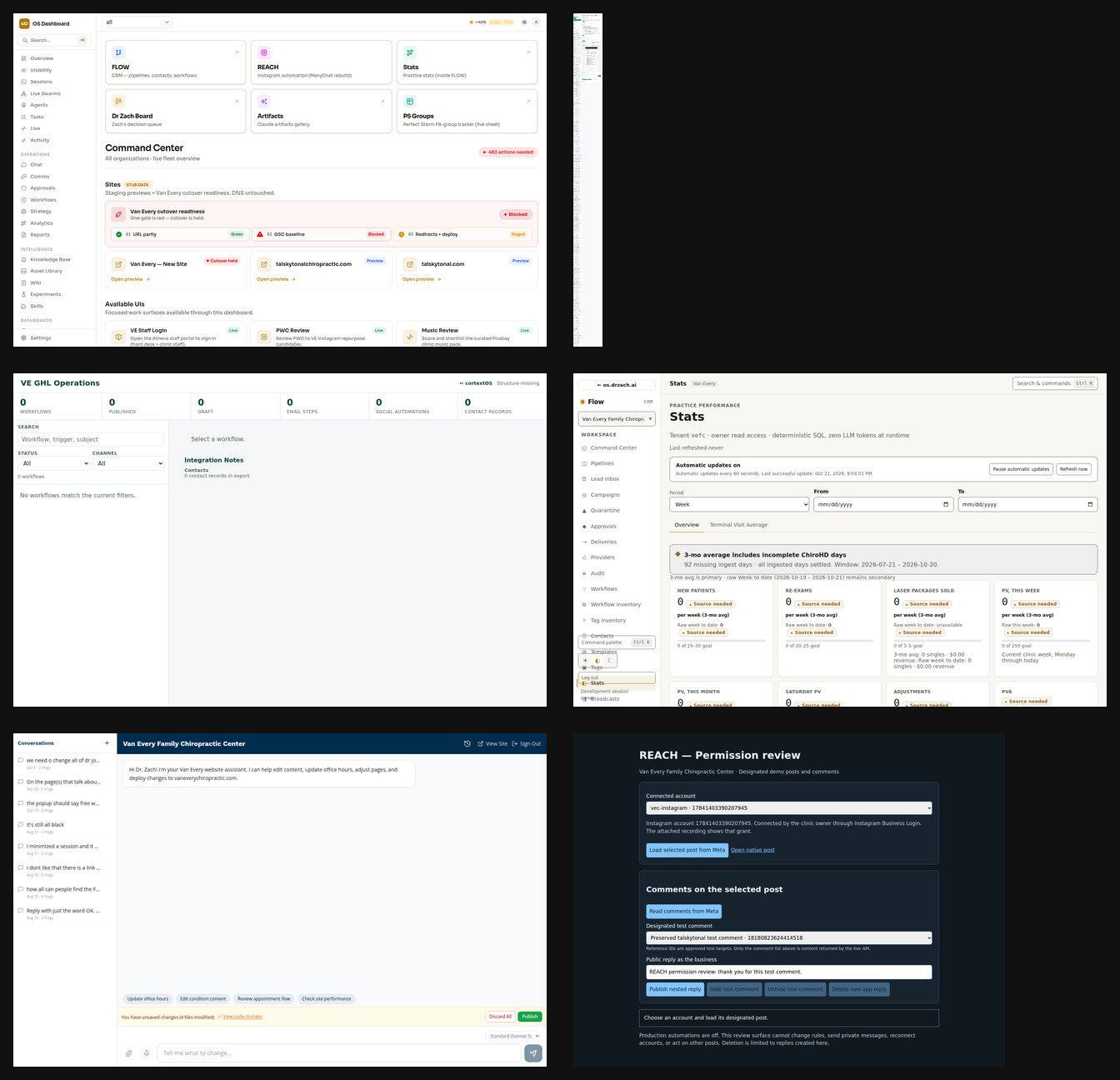
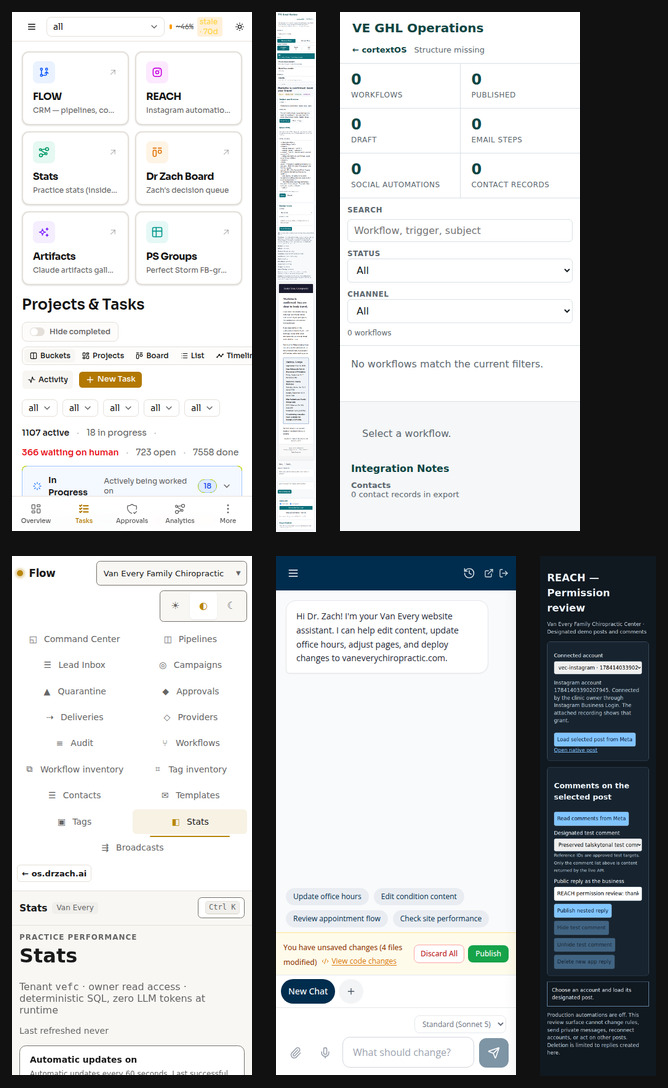
Six standalone shells plus eight authenticated/service-backed interiors. Write requests were blocked during capture; only local login callbacks and read operations were allowed.
| Surface | Score | Top fix |
|---|---|---|
| FLOW stats | 88/100 | Bring dense mobile navigation and controls to 44px targets. |
| REACH permission reviewer | 86/100 | Increase the native-post link hit area; retain the restrained dark system. |
| Billing operations | 85/100 | Increase 37–39px fields and the 15px-high back link. |
| FLOW workflows | 80/100 | Restore the workflow data route, then retest the actual editor. |
| TTC Desk | 78/100 | Raise LOW-badge contrast from 3.11:1 and enlarge 19 targets. |
| cortextOS overview | 68/100 | Name the org selector, repair contrast, focus the activity scroller, suppress pulses. |
| Website admin | 64/100 | Restore zoom, name icon buttons, repair three contrast failures. |
| cortextOS tasks | 62/100 | Remove nested controls, name selectors, repair contrast and the ping loop. |
Standalone shell findings
Chat needs names for its search scope and auto-name checkbox, valid empty-list semantics, and stronger drawer contrast. Athena needs browser zoom restored, valid identity-chip semantics, stronger small-text contrast, and a real page heading. The Artifact Hub access screen was the strongest shell: direct, contained, and free of sampled axe failures.
State and test limitations
FLOW workflows showed its designed service-unavailable state because the current workflow route returned 404. Billing showed its current empty export. TTC Desk rendered its live workload. REACH loaded the designated post and comments using read-only controls. Automated axe checks were manually reconciled with visible labels to remove false positives.
Method
Scores prioritize work; they are not conformance certificates. Every automated result was checked against the rendered page and relevant source.
Four-mode rendering
1440×900 and 390×844, each under light and dark preference. Full-page captures activated lazy content and exposed document overflow.
Interaction checks
Accessible names, heading structure, 44px targets, keyboard-reachable scrolling, page errors, task states, and reduced-motion behavior.
Design review
Hierarchy, typography, materials, motion purpose, responsive composition, theme behavior, implementation integrity, and generic AI-design tells.
Internal corrections are applied and verified first, respecting active owners. Public client-site changes remain preview-only and require a separate before/after approval page before any merge or production deploy.